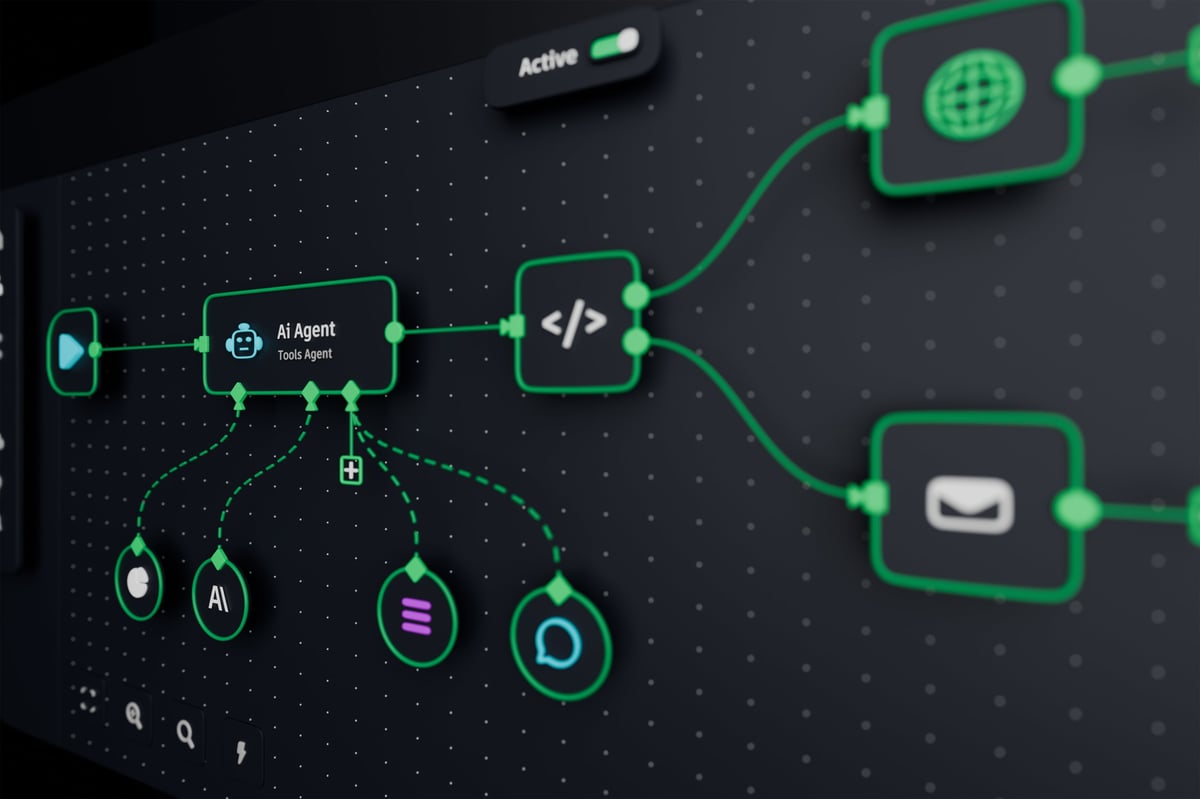
Representative deployment patterns showing where AI Integration Services Group can reduce manual work, surface operational intelligence, and support governed workflow automation across complex organizations.
Representative patterns. No fabricated client claims. Designed to show practical use cases, governance models, and measurable operating outcomes.
Each deployment pattern below maps to one or more of these outcome lanes — the operational capabilities AI Integration Services Group delivers.
Surface exceptions, anomalies, and patterns across siloed systems so teams can act before problems compound — without building manual reports.
Turn PDFs, contracts, forms, and emails into structured, queryable data — with confidence scoring, human review gates, and full extraction audit trails.
Route work to the right person at the right time based on AI-classified content, priority, and business rules — with exception escalation that preserves human judgment.
Consolidate data from disconnected systems into governed dashboards, narrative summaries, and review-ready reports — with data lineage, approval gates, and audit trails.
Each pattern illustrates a specific workflow, governance model, and category of measurable outcome — presented as an illustrative example, not a specific client case study.
Illustrative outcome ranges depend on workflow scope, data access, governance rules, and adoption.
Illustrative scenario: a multi-location retailer seeks faster visibility into inventory exceptions, promotional performance, and store-level stockouts across thousands of SKUs and 50+ locations.
Planning teams spend multiple days per promo cycle building reports manually. Inventory exceptions reach stores weeks after they occur. Stockout patterns remain invisible until shelf gaps appear.
Demand intelligence layer connecting POS, inventory, and supply chain systems. AI surfaces exceptions, anomaly alerts, and promo performance metrics in a unified planning dashboard.
Planner review gates for inventory adjustments. Exception escalation thresholds based on value and location. Full audit trail for inventory count changes.
Illustrative scenario: a mid-market investment bank seeks to give analysts faster access to deal context, client history, and research — without duplicating work across teams or losing institutional knowledge.
Analysts spend significant portions of deal time searching for context. Client history lives in email archives. Research exists in disconnected folders. Institutional knowledge walks out the door when senior bankers leave.
Governed enterprise search connecting email, document management, CRM, and deal tracking. Source-cited answers with permission boundaries. Analysts see different results than principals.
Role-based access controls by deal team and seniority. Source attribution on every answer for compliance audit trails. M&A sensitive materials excluded from search index by default.
Illustrative scenario: a regional insurer seeks to reduce claim intake time and adjuster prep work without compromising coverage accuracy or compliance requirements.
Claims intake can take days before adjuster review. Supporting documents — police reports, repair estimates, medical records — are manually reviewed before coverage decisions. High-volume periods create backlogs.
Document intelligence layer extracting claim data, coverage elements, and supporting document contents. AI pre-populates claim fields, flags coverage questions, and surfaces relevant prior claims for adjuster review.
Low-confidence extractions flagged for human review. Coverage determination thresholds require adjuster sign-off. Full extraction audit trail for regulatory compliance and disputes.
Illustrative scenario: a middle-market PE firm seeks to consolidate data from multiple portfolio companies into quarterly LP reports — without adding headcount or relying on each company's inconsistent reporting quality.
Quarterly LP reporting takes weeks of manual consolidation. Portfolio companies use different systems, formats, and definitions. Data quality varies. Executive time is spent on data assembly, not analysis.
Automated data consolidation across portfolio company ERP, CRM, and reporting systems. Canonical metric definitions applied uniformly. AI surfaces variance, flags anomalies, and drafts summary narratives for GP review.
GP review and approval gate before LP distribution. Data lineage tracked to source systems. Exception flags for significant variances. Audit trail for all data transformations.
Illustrative scenario: a CRE firm managing 200+ commercial properties seeks visibility into lease terms, renewal dates, tenant obligations, and portfolio-level exposure — without manual spreadsheet tracking.
Lease terms exist in PDF contracts across multiple systems. Renewal dates require manual tracking. Tenant escalation clauses remain invisible until they trigger. Deal review takes days when it should take hours.
Lease document intelligence extracting parties, dates, values, termination clauses, and renewal terms. Portfolio dashboard with renewal calendars, risk flags, and deal context.
Low-confidence extractions flagged for legal review. Master lease vs. sublease hierarchies preserved. Full extraction audit trail for disputes and audits.
Illustrative scenario: a precision manufacturer seeks visibility into supplier commitments, delivery performance, and inventory exposure across a complex multi-tier supply chain.
Supplier commitments tracked in email and PDFs. Production planning relies on incomplete data. Delivery exceptions aren't visible until components don't arrive. Inventory risk assessed by gut feel.
Document intelligence extracting supplier commitments from contracts and confirmations. Delivery performance data consolidated from ERP and logistics systems. AI surfaces delivery risk and inventory exposure.
Procurement review gate for commitment changes. Exception thresholds by supplier tier and value. Full audit trail for commitment extraction and changes.
We can review one operational workflow, identify where governed AI could reduce manual effort or improve visibility, and outline a practical deployment path.
No cost. No commitment. A structured conversation about your workflow and whether AI fits.